For Enquire Call us : 9811631557
Diploma in Digital Marketing with AI
Master Digital Marketing with Artificial Intelligence and Build a Future-Ready Career
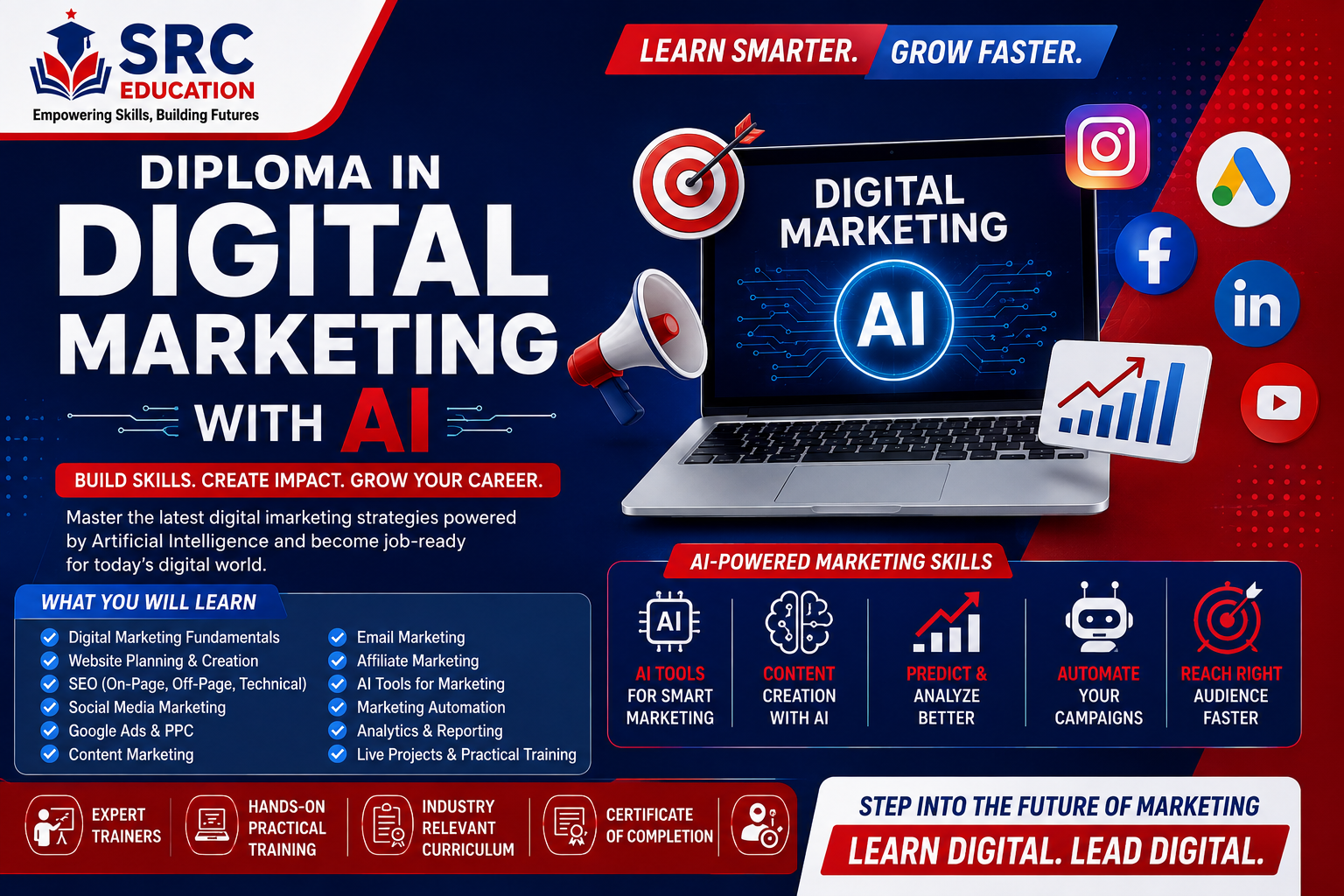
The Diploma in Digital Marketing with AI is a career-focused professional program designed for students, graduates, working professionals, business owners, entrepreneurs, freelancers, and individuals who want to build practical skills in digital marketing and artificial intelligence.
Digital marketing has become an essential part of modern business. Companies of every size use websites, search engines, social media platforms, online advertising, email marketing, content marketing, and other digital channels to reach customers and grow their businesses. At the same time, Artificial Intelligence is transforming the way marketers research audiences, create content, analyze data, develop campaigns, and improve marketing performance.
The combination of Digital Marketing and AI gives learners the opportunity to understand both traditional digital marketing techniques and modern AI-powered marketing workflows.
The course is designed to provide a comprehensive understanding of important digital marketing areas such as Search Engine Optimization, Search Engine Marketing, Social Media Marketing, Social Media Optimization, Content Marketing, Email Marketing, Affiliate Marketing, Online Advertising, Analytics, Lead Generation, Branding, and AI-powered marketing tools and techniques.
At SRC Education, the program focuses on practical and career-oriented learning so that students can understand marketing concepts and learn how they can be applied to real business situations.
What is Digital Marketing with AI?
Digital Marketing with AI combines digital marketing strategies with Artificial Intelligence technologies and tools.
Digital marketing involves promoting products, services, brands, and businesses through digital channels. AI can support marketers by helping them analyze information, understand customer behavior, generate ideas, automate repetitive activities, personalize communication, and improve campaign strategies.
For example, AI can help marketers generate content ideas, analyze customer data, create marketing drafts, identify trends, assist with keyword research, develop advertising concepts, and improve productivity.
However, successful digital marketing still requires human strategy, creativity, critical thinking, communication, and business understanding.
The Diploma in Digital Marketing with AI is designed to help learners understand how these capabilities can work together.
Why Choose a Diploma in Digital Marketing with AI?
Learn Digital Marketing from the Fundamentals
Students can start with the basics of digital marketing and gradually move toward advanced concepts and practical applications.
Develop AI-Powered Marketing Skills
Learners can understand how AI can support content creation, research, customer analysis, campaign planning, and marketing workflows.
Build Practical Skills
The course focuses on applying digital marketing concepts to real-world business situations.
Explore Multiple Marketing Channels
Students learn about SEO, social media, paid advertising, content marketing, email marketing, analytics, and other important digital channels.
Prepare for Modern Marketing Roles
The combination of marketing and AI skills can help learners prepare for evolving roles in the digital marketing industry.
Useful for Freelancing and Business
Digital marketing skills can be useful for freelancers, entrepreneurs, startups, agencies, and business owners who want to promote products and services online.
Who Should Join the Digital Marketing with AI Course?
This course can be suitable for:
- Students interested in digital marketing
- Graduates looking for career-oriented skills
- Working professionals planning a career change
- Marketing professionals who want to learn AI tools
- Social media managers
- Content creators
- Freelancers
- Entrepreneurs
- Small business owners
- Startup founders
- Website owners
- Bloggers
- E-commerce professionals
- Sales professionals
- Branding professionals
- Individuals interested in online advertising
- Anyone interested in building a career in digital marketing
No matter whether your goal is a job, freelance career, business growth, or personal branding, digital marketing knowledge can be valuable in today’s digital economy.
Course Curriculum
The Diploma in Digital Marketing with AI covers the major components of modern digital marketing.
Module 1: Introduction to Digital Marketing
Students begin by understanding the digital marketing ecosystem and how businesses use online channels to connect with customers.
Topics include:
- Introduction to digital marketing
- Traditional marketing vs digital marketing
- Digital marketing channels
- Online customer journey
- Digital branding
- Target audience
- Customer personas
- Marketing objectives
- Digital marketing strategy
- Marketing funnel
- Conversion journey
- Introduction to AI in marketing
Students learn how different digital channels work together as part of an overall marketing strategy.
Module 2: Search Engine Optimization
Search Engine Optimization is one of the most important areas of digital marketing.
SEO helps businesses improve their visibility in search engine results and attract relevant organic traffic.
Students learn:
- Introduction to SEO
- Search engine fundamentals
- Keyword research
- Search intent
- On-page SEO
- Off-page SEO
- Technical SEO
- Content optimization
- Title tags
- Meta descriptions
- Headings
- Internal linking
- Image optimization
- Link building fundamentals
- Local SEO
- Google Business Profile fundamentals
- SEO performance monitoring
Students also learn how SEO strategies can help businesses increase their online visibility.
Module 3: AI for SEO
Artificial Intelligence is increasingly being used to support SEO workflows.
Students can learn how AI can assist with:
- Keyword research ideas
- Search intent analysis
- Content planning
- Topic research
- Content outlines
- SEO content optimization
- Meta content generation
- FAQ ideas
- Content gap analysis
- Competitor research assistance
- Content improvement
- SEO workflow automation
The focus is on using AI as a productivity and research assistant while maintaining human review, originality, accuracy, and strategic thinking.
Module 4: Search Engine Marketing
Search Engine Marketing introduces students to paid search advertising.
Students learn:
- Introduction to paid search
- Search advertising
- Campaign structure
- Ad groups
- Keywords
- Match types
- Search intent
- Ad copy
- Landing pages
- Conversion tracking
- Bidding concepts
- Budget management
- Campaign optimization
- Performance analysis
Students can understand how businesses use paid advertising to reach customers who are actively searching for products and services.
Module 5: Social Media Marketing
Social media has become an important channel for brand awareness, engagement, customer communication, and lead generation.
Students learn how to develop social media strategies for different platforms.
Topics include:
- Social media fundamentals
- Platform selection
- Audience research
- Content planning
- Social media strategy
- Engagement
- Community building
- Social media campaigns
- Brand communication
- Lead generation
- Social media analytics
The module focuses on creating purposeful social media strategies rather than simply posting content.
Module 6: Social Media Optimization
Social Media Optimization focuses on improving a brand’s visibility and engagement across social platforms.
Students learn:
- Profile optimization
- Content optimization
- Hashtag strategy
- Audience engagement
- Social media branding
- Content consistency
- Community management
- Social media analytics
- Engagement optimization
- Social media growth fundamentals
Students can understand how optimized social profiles and content can improve brand visibility.
Module 7: AI for Social Media
AI can help marketers manage several repetitive and creative aspects of social media marketing.
Students learn how AI can assist with:
- Content ideas
- Caption generation
- Content calendars
- Post concepts
- Audience research
- Social media copy
- Creative brainstorming
- Content repurposing
- Campaign ideas
- Engagement analysis
- Social media workflow automation
The goal is to help marketers improve productivity while maintaining a consistent brand voice and human creativity.
Module 8: Content Marketing
Content marketing focuses on creating valuable and relevant content for a target audience.
Students learn:
- Content marketing fundamentals
- Content strategy
- Audience research
- Content planning
- Blog content
- Website content
- Social media content
- Educational content
- Lead-generation content
- Content distribution
- Content performance
- Content repurposing
Students understand how content can attract audiences, build trust, generate leads, and support business objectives.
Module 9: AI-Powered Content Creation
Artificial Intelligence can significantly improve content production workflows.
Students learn how AI can assist with:
- Content brainstorming
- Blog outlines
- Article drafts
- Social media captions
- Advertising copy
- Email ideas
- Video scripts
- Content summaries
- Content repurposing
- Creative concepts
- Content improvement
Students are encouraged to combine AI assistance with human editing, brand guidelines, factual verification, originality, and strategic thinking.
Module 10: Email Marketing
Email marketing allows businesses to communicate directly with customers and prospects.
Students learn:
- Email marketing fundamentals
- Email list building
- Audience segmentation
- Email campaign planning
- Subject lines
- Email copywriting
- Promotional emails
- Newsletter planning
- Lead nurturing
- Customer retention
- Email performance metrics
- Conversion optimization
Students learn how email campaigns can be used for communication, engagement, sales, and customer retention.
Module 11: Performance Marketing
Performance marketing focuses on measurable marketing outcomes.
Students learn about:
- Performance marketing fundamentals
- Lead generation
- Conversion campaigns
- Cost per lead
- Cost per acquisition
- Return on advertising spend
- Campaign measurement
- Conversion optimization
- Audience targeting
- Campaign performance
- Budget allocation
This module helps students understand how marketers evaluate campaigns based on measurable business results.
Module 12: Social Media Advertising
Students learn the fundamentals of paid advertising across social media platforms.
Topics include:
- Social media advertising
- Campaign objectives
- Audience targeting
- Ad formats
- Creative strategy
- Ad copy
- Budgeting
- Campaign setup
- Lead generation
- Conversion campaigns
- Performance tracking
- Campaign optimization
Students understand how paid social campaigns can be used to reach specific audiences.
Module 13: Google Ads Fundamentals
Google Ads is an important platform for businesses looking to reach customers through paid search and other advertising formats.
Students learn:
- Google Ads fundamentals
- Search campaigns
- Keywords
- Ad groups
- Ad copy
- Landing pages
- Audience targeting
- Budgeting
- Bidding concepts
- Conversion tracking
- Campaign optimization
- Performance analysis
Students gain an understanding of how paid search campaigns are planned and managed.
Module 14: Google Analytics and Marketing Analytics
Data plays an important role in digital marketing.
Students learn how analytics can help marketers understand:
- Website traffic
- User behavior
- Traffic sources
- Engagement
- Conversions
- Campaign performance
- Audience behavior
- Lead generation
- Marketing performance
The objective is to help learners make marketing decisions based on data rather than assumptions.
Module 15: AI for Marketing Analytics
AI can help marketers process information and identify patterns in marketing data.
Students can learn how AI can support:
- Data interpretation
- Performance summaries
- Trend identification
- Audience insights
- Campaign analysis
- Reporting assistance
- Marketing recommendations
- Performance comparisons
AI-generated insights should always be reviewed carefully and validated against reliable data.
Module 16: Lead Generation
Lead generation is an important part of digital marketing for businesses that sell products and services.
Students learn:
- Lead generation fundamentals
- Lead magnets
- Landing pages
- Lead forms
- Social media leads
- Search advertising leads
- Content-based lead generation
- Lead nurturing
- Customer qualification
- Conversion optimization
Students understand how digital channels can be used to attract potential customers.
Module 17: Landing Page and Conversion Optimization
A landing page can play an important role in converting visitors into leads or customers.
Students learn:
- Landing page fundamentals
- Landing page structure
- Headlines
- Call-to-action
- Content placement
- Trust elements
- Forms
- User experience
- Conversion principles
- A/B testing fundamentals
The module helps students understand how marketing traffic can be converted into meaningful business actions.
Module 18: Affiliate Marketing
Affiliate marketing allows individuals and businesses to earn commissions by promoting products or services through referral-based marketing.
Students learn:
- Affiliate marketing fundamentals
- Affiliate networks
- Product selection
- Target audience
- Affiliate content
- Promotional strategies
- Traffic generation
- Conversion tracking
- Commission models
- Performance analysis
Students understand how affiliate marketing fits within the broader digital marketing ecosystem.
Module 19: Branding and Online Reputation
A strong digital presence helps businesses build trust.
Students learn:
- Brand identity
- Brand positioning
- Brand communication
- Online reputation
- Customer reviews
- Social proof
- Brand consistency
- Digital brand presence
- Reputation management fundamentals
Students learn how consistent communication across digital platforms can strengthen a brand’s identity.
Module 20: Freelancing and Digital Marketing Career Skills
Digital marketing provides opportunities beyond traditional employment.
Students can learn about:
- Freelancing fundamentals
- Building a professional profile
- Creating a portfolio
- Finding clients
- Understanding client requirements
- Proposal writing
- Project communication
- Reporting
- Client retention
- Personal branding
- Digital marketing career paths
This module helps learners understand how digital marketing skills can be used for freelance and professional opportunities.
AI Tools and Marketing Productivity
The course introduces learners to the role of AI in modern marketing workflows.
Depending on the tools and curriculum available, students may learn how AI can assist with:
- Research
- Content planning
- Copywriting
- Content ideas
- Social media planning
- Marketing strategy
- Data analysis
- Reporting
- Customer insights
- Workflow automation
- Creative brainstorming
- Productivity
The emphasis is on responsible and effective use of AI rather than relying completely on automated output.
Skills You Can Develop
After completing the Diploma in Digital Marketing with AI, learners can develop skills in:
- Digital marketing
- SEO
- Local SEO
- Search engine marketing
- Social media marketing
- Social media optimization
- Content marketing
- Email marketing
- Performance marketing
- Lead generation
- Google Ads fundamentals
- Marketing analytics
- Landing page optimization
- Branding
- Online reputation management
- AI-assisted content creation
- AI-powered marketing workflows
- Campaign planning
- Audience research
- Marketing strategy
- Communication
- Copywriting
- Reporting
- Client management
Career Opportunities After Digital Marketing with AI
Digital marketing offers opportunities across agencies, startups, corporations, e-commerce businesses, educational organizations, service businesses, and freelance environments.
Depending on qualifications, skills, experience, and employer requirements, candidates may explore roles such as:
Digital Marketing Executive
Digital Marketing Executives assist with SEO, social media, content, paid campaigns, analytics, and other digital marketing activities.
SEO Executive
SEO professionals work on improving website visibility through keyword research, content optimization, technical improvements, and link-building strategies.
Social Media Executive
Social Media Executives manage social profiles, create content, engage with audiences, and support social media campaigns.
Performance Marketing Executive
Performance marketing professionals work with measurable campaigns focused on leads, conversions, and other business objectives.
Content Marketing Executive
Content professionals plan and create content for websites, blogs, social media, email campaigns, and other digital channels.
PPC Executive
PPC professionals assist with paid search and advertising campaigns, keyword management, ad creation, and campaign optimization.
Digital Marketing Analyst
Digital marketing analysts work with marketing data to understand campaign performance, website behavior, traffic, and conversions.
Social Media Manager
Social Media Managers plan social media strategies, manage content calendars, monitor engagement, and coordinate campaigns.
Content Strategist
Content strategists develop content plans based on audience needs, business objectives, and marketing goals.
Digital Marketing Freelancer
Freelancers can provide digital marketing services to businesses, startups, agencies, and individual clients.
Digital Marketing for Entrepreneurs and Business Owners
Digital marketing is not only useful for people looking for jobs.
Entrepreneurs and business owners can use digital marketing to:
- Promote their products
- Generate leads
- Build brand awareness
- Reach local customers
- Increase website traffic
- Promote services
- Build social media presence
- Communicate with customers
- Run online advertising
- Analyze customer behavior
- Improve customer engagement
Learning AI-powered marketing can also help business owners improve productivity and manage certain marketing workflows more efficiently.
Practical Learning Approach
Digital marketing is a practical field. Students need to understand how marketing strategies are implemented, measured, and improved.
At SRC Education, learners can work with practical examples and marketing activities such as:
- Keyword research exercises
- SEO activities
- Content planning
- Social media planning
- Campaign strategy
- Advertising exercises
- Analytics interpretation
- Landing page planning
- Marketing reports
- AI-assisted content workflows
- Business case studies
- Digital marketing projects
Practical exposure can help students develop confidence and understand how digital marketing works in real business situations.
Why Choose SRC Education?
Career-Oriented Curriculum
The program covers major areas of digital marketing along with emerging AI applications.
Practical Learning
Students can learn through activities, examples, assignments, projects, and marketing exercises.
AI-Focused Approach
The program introduces learners to how Artificial Intelligence can support modern marketing workflows.
Multiple Career Options
Digital marketing skills can be applied across SEO, social media, advertising, content, analytics, and other areas.
Professional Skill Development
Students can improve communication, presentation, creativity, analytical thinking, and marketing strategy skills.
Supportive Learning Environment
Learners can receive guidance from trainers throughout their course journey.
Frequently Asked Questions
What is a Diploma in Digital Marketing with AI?
It is a professional program that combines digital marketing concepts with Artificial Intelligence applications to help learners develop modern marketing skills.
What will I learn in this course?
You can learn SEO, SEM, social media marketing, content marketing, email marketing, performance marketing, Google Ads fundamentals, analytics, lead generation, branding, and AI-assisted marketing.
Is AI important in digital marketing?
AI is becoming increasingly useful in areas such as content creation, research, personalization, data analysis, workflow automation, and marketing productivity.
Can beginners join this course?
Yes. A structured digital marketing program can begin with fundamentals and gradually introduce advanced concepts and AI applications.
Can I get a job after completing the course?
The course can help learners develop skills relevant to digital marketing roles. Employment depends on qualifications, practical skills, portfolio, experience, and employer requirements.
What jobs can I explore after the course?
Possible career paths include Digital Marketing Executive, SEO Executive, Social Media Executive, PPC Executive, Content Marketing Executive, Performance Marketing Executive, Digital Marketing Analyst, and Digital Marketing Freelancer.
Can I become a freelancer after learning digital marketing?
Yes. Digital marketing skills can be used to offer services such as SEO, social media management, content marketing, paid advertising, and website marketing to clients.
Can business owners benefit from this course?
Yes. Business owners can use digital marketing knowledge to promote their businesses, generate leads, build their online presence, and understand digital customer behavior.
Does the course teach AI tools?
The program focuses on the role of AI in digital marketing and can include AI-assisted research, content creation, marketing planning, analytics, and productivity workflows depending on the current curriculum and tools used.
Is practical training important in digital marketing?
Yes. Digital marketing is an application-based field, so practical projects, exercises, campaign planning, analytics, and real-world examples can be valuable parts of learning.
Start Your Digital Marketing Career with AI
Digital marketing continues to evolve as businesses increasingly depend on online platforms to reach customers. At the same time, Artificial Intelligence is changing how marketers research, create, analyze, personalize, and manage marketing activities.
Learning both areas can help professionals understand the modern marketing environment and develop skills that can be applied across different industries.
The Diploma in Digital Marketing with AI at SRC Education is designed to help learners build a strong foundation in digital marketing while understanding the growing role of Artificial Intelligence in marketing.
Whether you want to pursue a career, start freelancing, promote your own business, work with an agency, or develop your personal brand, the skills gained through this program can provide a strong starting point.
Take the Next Step
Build your digital marketing knowledge, develop AI-powered marketing skills, and prepare yourself for the changing digital business environment.
Learn Digital Marketing. Use AI. Build Your Future.
Contact SRC Education to learn more about the Diploma in Digital Marketing with AI, eligibility, duration, fees, batch timings, and admission process.